


Key Takeaways
Ben Graham, the GOAT, got the ball rolling.
Ben Graham spent his career building a rigid wall, separating investment from speculation. In his very effort to be thorough, however, Graham himself introduced these little linguistic slips, which started to create tiny subtle cracks in that pristine foundation.
The subtitle of The Intelligent Investor is the smoking gun.
In trying to sell the classic to a new generation, after Graham’s death, a sexy catchphrase was needed. The rising star, Warren Buffett, gave the publisher what they were looking for: “Value investing.”
Buffett didn’t just stay silent. He quickly recognized his error and attempted to undo it.
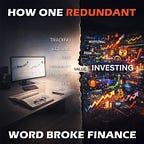
In his 1992 investor letter, Warren Buffett set the record straight when he called “value investing” redundant. Yet for the financial community, it merely registered as a footnote. The myth had already gained a life of its own. It was just too convenient, too marketable and too deeply entrenched in the emerging financial taxonomy to be thrown away.
Charlie Munger, the straight shooter, concurred with Buffett, but added some unnecessary qualifiers himself.
“All good investing is value investing,” said Munger. The subtle inclusion of the word “good” inadvertently expanded the logical boundaries of the entire category of investing to include speculation, giving speculation a linguistic foothold.
All unnecessary qualifiers need to be removed.
There is no sound investing, good investing, intelligent investing or value investing. Investing, by definition, inherently includes all of these.
Value investing IS investing.
The industry kept the adjectives and clung on to the labels.
The finance version of Parkinson’s law: Investing expands so as to fill the space available for trading. The ambiguous language allows speculation to not only encroach on, but to eventually just subsume the core category of true investing. The levee breaks and becomes a swamp.
Similar to diabetes, speculation comes in two types.
Speculation in cash-flow-generating assets was the problem in 20th-century finance. Speculation in non-cash-flow-generating assets is the problem in 21st-century finance. The linguistic void is precisely what created the perfect environment for speculation in crypto.
Is this just academic quibbling? No, it’s much more.
The costs are very real and very large. They manifest in both the finance and legal worlds.
→ When Wall Street happily sells speculation as investment, the market becomes very poor at its primary job: Efficiently directing capital to productive enterprises.
→ The public ends up speculating under the guise of investing. They are denied protection at the exact moment it’s needed most.
→ Why? Because the judiciary itself is not immune to flaws in language. The linguistic error literally prevents the law from functioning effectively. The Howey test gets misapplied and the protections disappear.
Finance doesn’t have a monopoly on persistent myths.
→ Isaac Newton, like Ben Graham, was judged unfairly.
→ Both myths gained meaningful momentum after the OGs passed away.
→ Language is the culprit. A mistranslation in physics, and a logical redundancy, likely marketing-driven, in finance.
→ Both myths persisted because it was easier to accept the established consensus than to undertake the rigorous critical thinking required to challenge the master.
But:→ Finance, unlike physics, suffered much more from the error.
We are firmly persuaded that finance would have gone differently had this one redundancy not occurred. One redundant word, “value,” compromised the intellectual honesty of the entire discipline.
We are also firmly persuaded that it’s still not too late to get back on track. The choice is now yours.