


🔑 Key Takeaways
Mainstream media could turn into a laundering mechanism for manipulated probabilities:
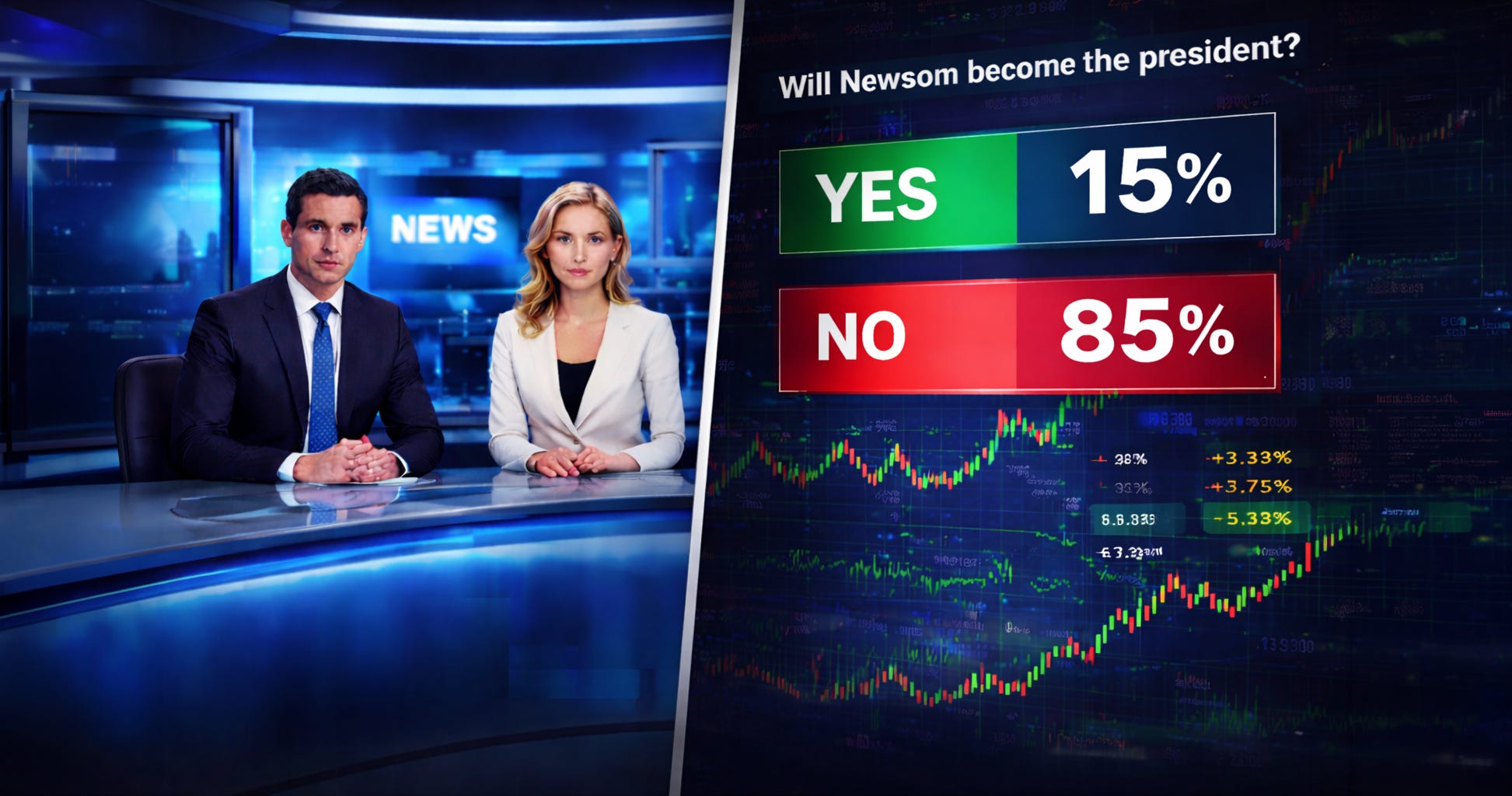
The episode’s most explosive insight is that once prediction‑market data appears on CNN, Fox, CNBC, or The Wall Street Journal, it undergoes a transformation.Prediction markets introduce a new vector for engineered influence over public perception—and potentially over democratic outcomes:
Because these markets have shallow liquidity, a well‑funded actor can “buy” a probability spike and once that spike appears on a news ticker, it shapes voter psychology, consumer behavior and market sentiment.
Newsrooms are now forced to navigate a deep internal conflict between their own proprietary research and live crowdsourced data:
Legacy outlets have spent decades building polling divisions, forecasting models, and editorial standards. Prediction markets bulldoze that infrastructure.Media–market partnerships are accelerating faster than the regulatory framework can keep up:
While CNN, CNBC, Fox, Dow Jones outlets and even Bloomberg have already integrated Kalshi or Polymarket data, America is still fighting over the foundational question: Is this finance or gambling?
Editorial independence is being stress‑tested in real time:
The CNBC example—where anchors aggressively questioned Kalshi’s CEO despite their parent company being a minority investor—shows the firewall can hold. But the episode warns that this integrity depends on individual journalists, not structural safeguards. Smaller networks, local affiliates and financially strained outlets may not withstand the same pressures.